
How Many Lives Are You Allowed to Live?
A client of mine has been a film producer, an online investor, and — as of three months ago — the owner of his first engraving shop. He's not done yet.
Callum* came to me after the investing had stopped being fun. Not failed — stopped being fun. Two years earlier it had stopped being film, for the same quiet reason. He wasn't burnt out, exactly. He was just done being that guy, whichever guy it currently was, and starting to wonder if that made him flaky or non commital.
It doesn't. But I understand why he asked.
We're taught to treat a resume like a court transcript — evidence for or against you. Consistent, coherent, easy to summarise in one sentence. So, the moment your own life stops reading like a straight line, some part of you starts building a defence. "I've got a plan. This one's real."
But nobody actually needs that defence. The people who quietly impress me most tend to have the messiest resumes in the room — the accountant who's now a DJ, the lawyer who runs a flower shop on weekends and then not just weekends, the engineer who wrote the novel nobody at work knew he had in him. Somewhere right now there's a 50-year-old about to have the best year of their life, purely because they stopped waiting for permission that was never going to arrive. Isn’t that refreshing but probably to most sounds odd.
Identity isn't a fact. It's a habit.
Here's the bit that surprised Callum when I explained it, and it's genuinely simple: your sense of "who you are" isn't stored anywhere as a fixed truth. It's a story your brain keeps re-telling because re-telling it is cheap. Predicting "I am a film producer, therefore I will do film-producer things" takes far less energy than reconsidering who you are every single morning. Your brain isn't protecting your identity because it's precious. It's protecting it because it's efficient. Psychologists have had a name for this since the 1970s: a self-schema, a mental shortcut your brain builds so it doesn't have to re-evaluate who you are from scratch every day.
That's useful to know, because it means the pull to stay who you've always been isn't wisdom. It's a shortcut. And shortcuts are brilliant for finding the quickest route home — terrible for deciding whether you actually want to keep living there.
There's a decent chunk of neuroscience on novelty too, and none of it says what we assume. Trying something genuinely new — a skill, a room full of strangers, a version of you that's never been tested — actually lights up the brain's reward circuitry in a way repetition simply can't match — brain-imaging studies have found novelty activates the same dopamine pathways as reward itself, distinct from anything familiar, however pleasant. We talk about "growth" like it's a nice-to-have. Biologically, it's closer to a nutrient. People who keep a bit of novelty running through their life report more energy and more life satisfaction than people who optimise everything for smoothness, which tracks with research linking novelty-seeking to higher life satisfaction, not just a bigger buzz. Sameness isn't calm. It's just familiar. Those aren't the same thing, even though they feel identical from the inside.
What we actually did
We didn't plan Callum a five-year exit strategy. That's the version of "change" that sounds responsible and never happens, because it's really just anxiety wearing a business suit.
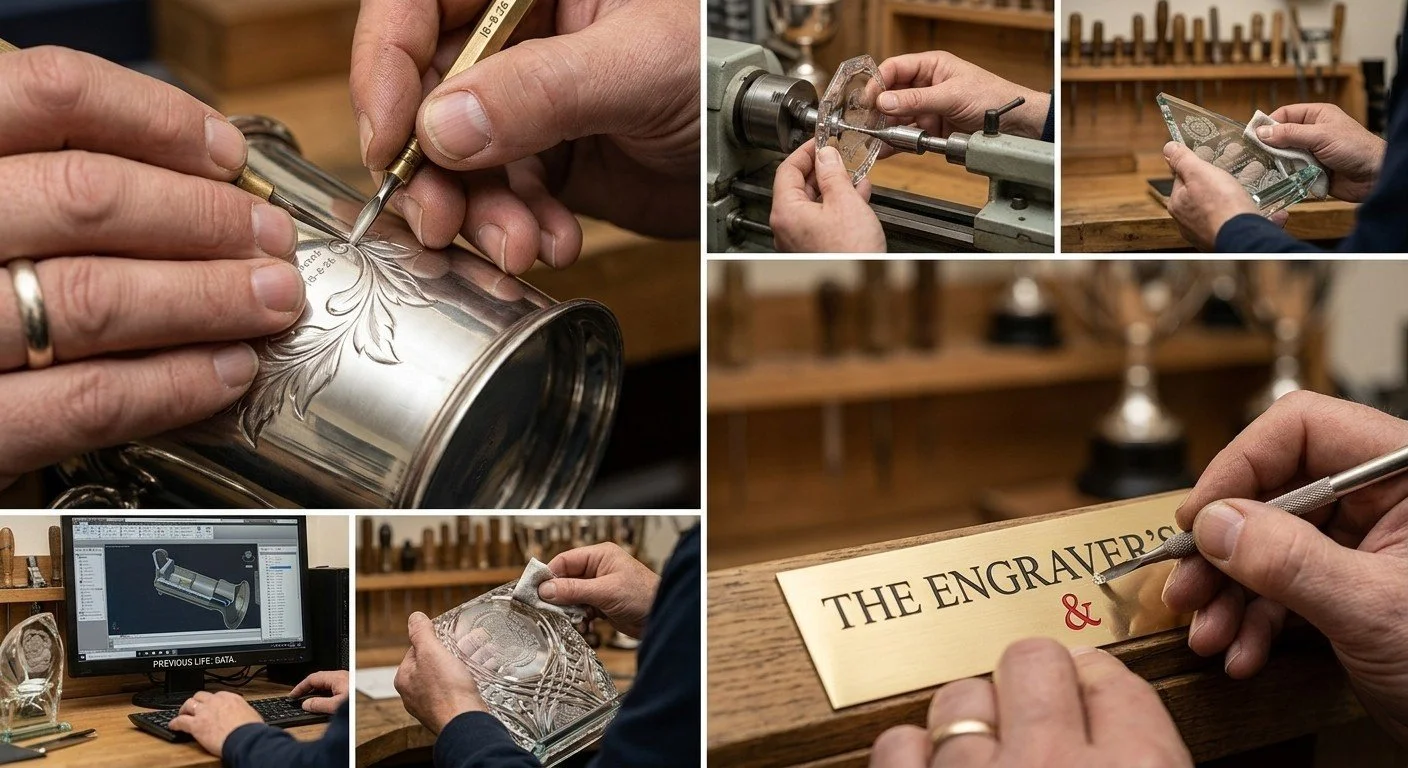
What actually happened was smaller and stranger than a plan. Callum was quietly looking around for an interesting business to put some of his investor brain into — not a career change, just opportunity watching. An engraving shop came up. Unglamorous, nobody's making a documentary about it, and something in him said yes before he'd built a business plan to justify why.
He didn't leap in blind, though. He shadowed the owner for three months first — learning the machines, the customers, the actual work with his hands — before he took the business over. That's the interesting part worth noting, more than the size of the change: the order of operations. Curiosity first. Competence second. Commitment once he already half-knew what he was walking into.
Now he's running it. New skills he's still building. Business booming. And he's happier doing this than he was in either the film years or the investing years, despite it carrying noticeably less status.
I want to be careful here, because the story could sound like it's about reckless leaps. It isn't. Callum tested the fit with his hands and his time before he tested it with his bank balance. Most of the men I work with don't need a bigger change or a smaller one. They need permission to follow the interesting thing far enough to find out if it's real — before they've talked themselves out of it on paper.
The safety story we've got backwards
We treat "staying the same" as the safe option and "trying something new" as the risky one. I'd push back on that, because it's only true if you define safety as nothing changes. Define it as I can handle change and the ranking flips entirely.
· The person with one identity, one script, one way of introducing themselves at a dinner party — they're not safe. They're brittle. Take away the one role they've built their whole sense of self around —
· Divorce or a long relationship ending — someone's been "someone's partner" so long they've lost track of who they are solo.
· Retirement — especially for men whose social status and daily structure ran entirely through a job title.
· A serious health diagnosis that ends a physical identity — the runner who can't run, the tradesman whose body gives out.
· Losing a caregiving role — being "the strong one" for a sick parent or partner for years, then that person dies or recovers and the role just ends.
· Finally getting the promotion or exit goal chased for a decade, only to find the goal was the whole identity — and now there's nothing left to chase.
Someone who's already lived three or four versions of themselves knows they can survive the change. That's not recklessness — that's resilience, built by practising change while the stakes are still low. Playing it safe by staying still isn't caution. It's just risk you've deferred to a worse moment.
Three places to start, if this sounds familiar
Borrow a life for an afternoon, not a decade. You don't need to quit anything to test a different version of yourself. Callum didn't. Pick the smallest possible unit of the thing you're curious about and do that once.
Follow curiosity before competence. We wait to feel qualified before we let ourselves enjoy something. Reverse it. Being bad at something new, on purpose, is one of the few socially acceptable ways left to feel genuinely alive.
Say the plot twist out loud to one person. Not a business launch — just one honest sentence to someone you trust: "I think I want to try something different." Identity holds its shape best in private and loses its grip fastest the moment you say the quiet part out loud. Yes really.
You get one life, as far as we know. But nobody ever said you only get one version of yourself inside it.
How many lives are you allowed to live? As many as you're willing to admit you want.
If you recognise yourself somewhere in Callum's story, that's usually worth a conversation. Book a free 30-minute discovery call — change starts with one.
*Name changed to protect client privacy.
Sources
Markus, H. (1977). Self-Schemata and Processing Information About the Self. Journal of Personality and Social Psychology.
Bunzeck, N. & Düzel, E. (2006). Absolute Coding of Stimulus Novelty in the Human Substantia Nigra/VTA. Neuron.
Frontiers in Psychology (2015). Novelty-seeking, positive affect and life satisfaction.
#HowManyLivesAreYouAllowedToLive #ReinventYourself #IdentityShift #PermissionToChange #BurnoutRecovery #BurnoutCoach #NervousSystemRegulation #TheRemappedMan #EncompassCoaching #MidlifeReinvention #PlotTwist #CareerChange #MensMentalHealth #HighAchieverBurnout #StopPlayingItSafe #WhoAreYouReally #PersonalGrowth #CoachingForMen #StartAgain #NewChapter
Russ Bignell — The Remapping Coach
Russ Bignell works with high-achieving men who sense a gap between the life they've built and the one they actually want to be living. He's been that man himself, which is why he knows that more effort, more discipline, and more self-improvement content rarely closes it.
His work sits at the intersection of identity shift, behaviour change, and neuroscience, helping men understand not just what needs to change, but who they need to become for that change to last.
Russ uses his Remapped Man concept to work with men across the UK and internationally. The men he works with leave clearer on who they are, more deliberate in how they show up, and finally able to close the gap between the man they've been and the one they know they could be.